Ping (ICMP)
Reachability and latency for hosts, routers and anything with an IP.
Five check types, confirmed outages, one history.
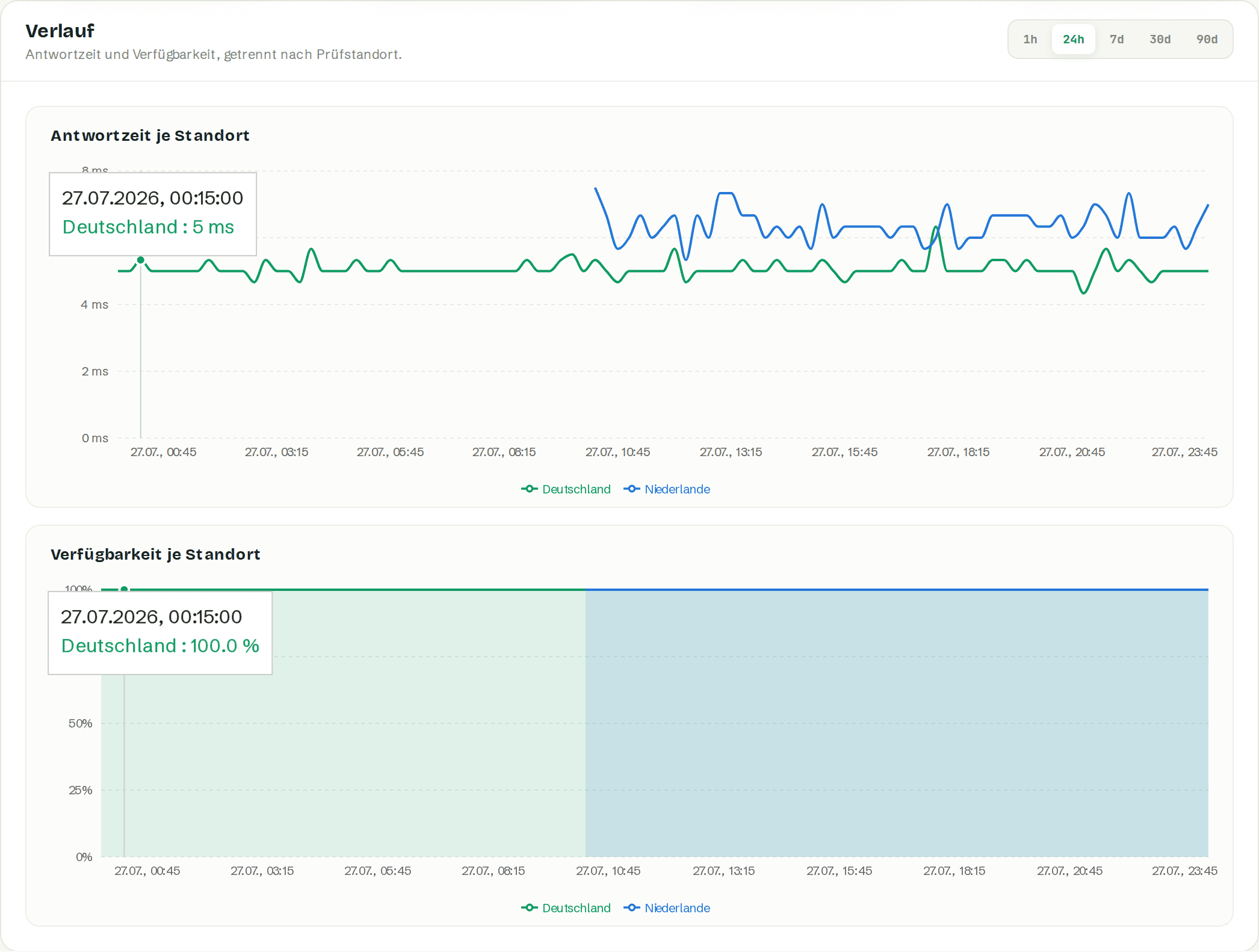
Uptimo checks not only whether a service answers but what it answers. Every monitor carries an interval, a timeout, an expected status code and optionally a string that must appear in the response — an error page served with status 200 does not pass as healthy.
What matters here
Status code, response time, redirects and a required string in the body.
Reachability and latency for hosts, routers and anything with an IP.
Database, mail server or your own service: does the port answer at all?
Resolution and zone availability, before customers see an empty page.
Expiry and chain, so no certificate lapses unnoticed.
Down only after several consecutive failures — a single blip wakes nobody.
FAQ
HTTP and HTTPS, ICMP ping, TCP port, DNS and TLS certificates.
Uptimo confirms an incident only after several consecutive failures. A single blip remains one failed check.
You can require both a status code and a string in the response body, so an error page served as HTTP 200 still fails.