Separate incidents
If one location fails, the incident stays scoped to it. When it recovers, only that incident closes — the other locations keep measuring.
One monitor, several countries, one incident per location.
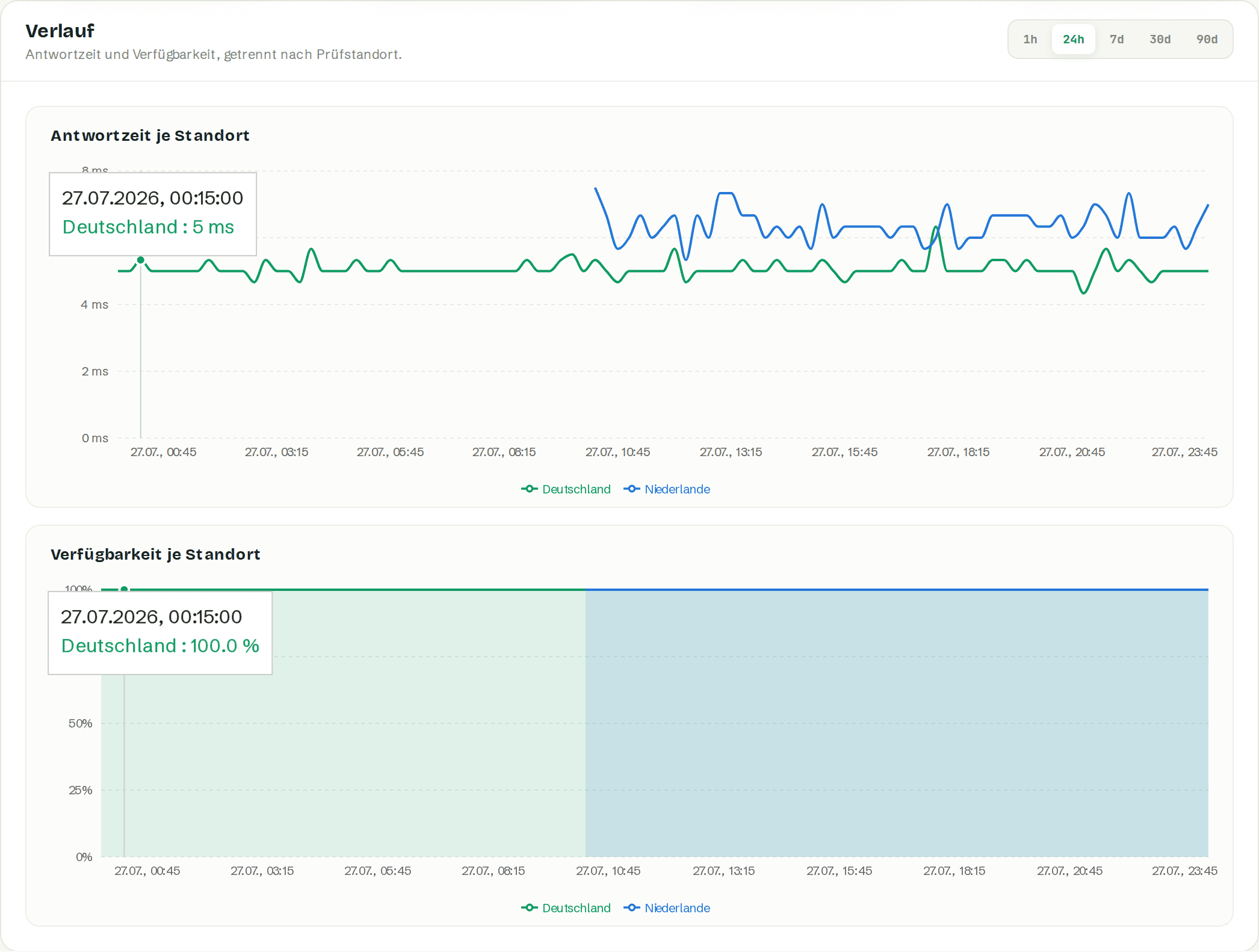
A service can be reachable from Frankfurt and dead from Tokyo — routing, geoblocking, a broken peering. You pick the locations per monitor; each one measures independently, with its own schedule, status and incident.
What matters here
The notification names the place: “Shop @ Tokyo is unreachable”. Whoever is on call knows immediately whether it burns regionally or globally.
If one location fails, the incident stays scoped to it. When it recovers, only that incident closes — the other locations keep measuring.
A location silent for 90 seconds drops out of the aggregate status. An outage on our side must never look like yours.
If an assignment goes away, the location pool takes over automatically. No monitor goes silent because a location is under maintenance.
FAQ
Yes. Schedule, failure count, status and incident are tracked per checking location.
A location silent for more than 90 seconds is excluded from the aggregate state. It does not falsely turn your monitor red.
No. Without a fixed assignment, the shared location pool takes over.